High-density polyethylene (HDPE)
| ABNSABNS — Acid-Based No-Rinse Sanitiser The class of acid-based sanitisers used in homebrewing, combining phosphoric acid with an anionic alkylbenzenesulfonate surfactant. The acid creates a low-pH environment hostile to microorganisms; the surfactant disrupts cell membranes. Examples: Star San, Sanipro Rinse, StellarSan, Chemsan. Approved for use on food-contact surfaces without rinsing when used at the manufacturer's specified dilution. | DESDES — Disinfectant Ethanol Sanitiser ChemiPro DES. An ethanol-based (70–80%) sanitiser with no non-volatile residue. Evaporates completely, leaving no WDC risk. A-rated for all common homebrewing materials. | Cleaning | Beer/wortWort Liquid extracted from malted grain during mashing and boiling, before fermentation. The starting point for beer. | |
|---|---|---|---|---|
| Rating | A | A | A | A |
The Cleaning column aggregates all cleaning product categories used in homebrewing at working concentrations. For a breakdown by cleaner type — alkaline percarbonate, phosphate-based, and oxidising — see the Cleaning compatibility section below.
HDPEHDPE — High-Density Polyethylene A polyolefin plastic used in fermenter taps and spray bottles. Slightly better chemical barrier properties than PP. EU Regulation 10/2011 compliant. is a semi-crystalline polyolefinPolyolefin A class of polymers made by polymerising simple alkene (olefin) monomers — propylene for polypropylene, ethylene for polyethylene. The resulting polymer has an all-carbon backbone with no functional groups susceptible to hydrolysis, which is the primary reason polyolefins have excellent resistance to acids, alkalis, and aqueous environments. PP and HDPE are both polyolefins. closely related to PPPP — Polypropylene A semi-crystalline polyolefin plastic widely used in fermenter buckets, lids, taps, and airlocks. Excellent chemical resistance across all homebrewing chemical environments. EU Regulation 10/2011 compliant., distinguished by its almost fully linear chain with minimal branching. That linearity allows the chains to pack together more tightly, producing higher crystallinity — typically 70–90% versus 40–70% for PPPP — Polypropylene A semi-crystalline polyolefin plastic widely used in fermenter buckets, lids, taps, and airlocks. Excellent chemical resistance across all homebrewing chemical environments. EU Regulation 10/2011 compliant.. The dense, ordered crystalline structure this creates gives HDPEHDPE — High-Density Polyethylene A polyolefin plastic used in fermenter taps and spray bottles. Slightly better chemical barrier properties than PP. EU Regulation 10/2011 compliant. greater rigidity, higher tensile strength, and better chemical barrier performance than lower-density variants of polyethylene.
In homebrewing, HDPEHDPE — High-Density Polyethylene A polyolefin plastic used in fermenter taps and spray bottles. Slightly better chemical barrier properties than PP. EU Regulation 10/2011 compliant. appears in fermenters, fermenter tap bodies, food grade storage containers, vessels for hot liquid contact, chemical storage containers, and a range of accessories including funnels and measuring jugs. Where HDPEHDPE — High-Density Polyethylene A polyolefin plastic used in fermenter taps and spray bottles. Slightly better chemical barrier properties than PP. EU Regulation 10/2011 compliant. is worth choosing over PPPP — Polypropylene A semi-crystalline polyolefin plastic widely used in fermenter buckets, lids, taps, and airlocks. Excellent chemical resistance across all homebrewing chemical environments. EU Regulation 10/2011 compliant. — despite PPPP — Polypropylene A semi-crystalline polyolefin plastic widely used in fermenter buckets, lids, taps, and airlocks. Excellent chemical resistance across all homebrewing chemical environments. EU Regulation 10/2011 compliant.'s dominance in the homebrew market (PPPP — Polypropylene A semi-crystalline polyolefin plastic widely used in fermenter buckets, lids, taps, and airlocks. Excellent chemical resistance across all homebrewing chemical environments. EU Regulation 10/2011 compliant. is a commodity polymer, lower cost to injection-mould at the bucket scale, and historically first-adopted for food-contact fermentation vessels) — is in applications where its higher crystallinity provides a meaningful advantage: tap bodies, where Zone B geometry at the thread roots is where WDCWDC — Wet-Dry Cycle The process by which liquid applied to a surface evaporates, leaving non-volatile components concentrated as a dry residue. A single WDC deposits concentrated DDBSA and phosphoric acid on every sanitised surface. Repeated WDC events without cleaning cause residue to accumulate, progressively increasing exposure. Post-brew cleaning resets accumulation to zero. See: The wet-dry cycle model. residue concentrates; and hot-fill vessels, where HDPEHDPE — High-Density Polyethylene A polyolefin plastic used in fermenter taps and spray bottles. Slightly better chemical barrier properties than PP. EU Regulation 10/2011 compliant.'s higher heat deflection temperature makes it structurally appropriate for sustained hot liquid contact in a way that PPPP — Polypropylene A semi-crystalline polyolefin plastic widely used in fermenter buckets, lids, taps, and airlocks. Excellent chemical resistance across all homebrewing chemical environments. EU Regulation 10/2011 compliant. is not.
Identifying HDPE
Look for the Resin Identification CodeRIC — Resin Identification Code A numerical code moulded into the base of plastic articles to identify the polymer type, introduced by the Society of the Plastics Industry (now PLASTICS) in 1988 and represented by three chasing arrows forming a triangle with the number inside. Codes 1–7 cover the most common polymer families: 1 = PET, 2 = HDPE, 3 = PVC, 4 = LDPE, 5 = PP, 6 = PS, 7 = other. The RIC identifies the polymer backbone only — it says nothing about the additive package, food grade status, or GMP compliance. Food grade and industrial grade articles of the same polymer carry the same RIC code. moulded into the base of the article — three chasing arrows forming a triangle, with the number 2 inside and HDPEHDPE — High-Density Polyethylene A polyolefin plastic used in fermenter taps and spray bottles. Slightly better chemical barrier properties than PP. EU Regulation 10/2011 compliant. below.
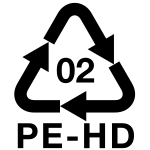
The RIC 2 symbol as it appears on the base of HDPE articles.
RICRIC — Resin Identification Code A numerical code moulded into the base of plastic articles to identify the polymer type, introduced by the Society of the Plastics Industry (now PLASTICS) in 1988 and represented by three chasing arrows forming a triangle with the number inside. Codes 1–7 cover the most common polymer families: 1 = PET, 2 = HDPE, 3 = PVC, 4 = LDPE, 5 = PP, 6 = PS, 7 = other. The RIC identifies the polymer backbone only — it says nothing about the additive package, food grade status, or GMP compliance. Food grade and industrial grade articles of the same polymer carry the same RIC code. symbol: Anton Poliakov, Wikimedia Commons, CC BY-SA 4.0. Modified: fill colour adapted for dark-mode display.
HDPEHDPE — High-Density Polyethylene A polyolefin plastic used in fermenter taps and spray bottles. Slightly better chemical barrier properties than PP. EU Regulation 10/2011 compliant. is typically white, off-white, or translucent — similar in appearance to PPPP — Polypropylene A semi-crystalline polyolefin plastic widely used in fermenter buckets, lids, taps, and airlocks. Excellent chemical resistance across all homebrewing chemical environments. EU Regulation 10/2011 compliant. at first glance. The RICRIC — Resin Identification Code A numerical code moulded into the base of plastic articles to identify the polymer type, introduced by the Society of the Plastics Industry (now PLASTICS) in 1988 and represented by three chasing arrows forming a triangle with the number inside. Codes 1–7 cover the most common polymer families: 1 = PET, 2 = HDPE, 3 = PVC, 4 = LDPE, 5 = PP, 6 = PS, 7 = other. The RIC identifies the polymer backbone only — it says nothing about the additive package, food grade status, or GMP compliance. Food grade and industrial grade articles of the same polymer carry the same RIC code. 2 code is the most reliable way to distinguish it from PPPP — Polypropylene A semi-crystalline polyolefin plastic widely used in fermenter buckets, lids, taps, and airlocks. Excellent chemical resistance across all homebrewing chemical environments. EU Regulation 10/2011 compliant. (RICRIC — Resin Identification Code A numerical code moulded into the base of plastic articles to identify the polymer type, introduced by the Society of the Plastics Industry (now PLASTICS) in 1988 and represented by three chasing arrows forming a triangle with the number inside. Codes 1–7 cover the most common polymer families: 1 = PET, 2 = HDPE, 3 = PVC, 4 = LDPE, 5 = PP, 6 = PS, 7 = other. The RIC identifies the polymer backbone only — it says nothing about the additive package, food grade status, or GMP compliance. Food grade and industrial grade articles of the same polymer carry the same RIC code. 5) and from other white or translucent plastics when the material is not explicitly stated. Many HDPEHDPE — High-Density Polyethylene A polyolefin plastic used in fermenter taps and spray bottles. Slightly better chemical barrier properties than PP. EU Regulation 10/2011 compliant. articles do carry RICRIC — Resin Identification Code A numerical code moulded into the base of plastic articles to identify the polymer type, introduced by the Society of the Plastics Industry (now PLASTICS) in 1988 and represented by three chasing arrows forming a triangle with the number inside. Codes 1–7 cover the most common polymer families: 1 = PET, 2 = HDPE, 3 = PVC, 4 = LDPE, 5 = PP, 6 = PS, 7 = other. The RIC identifies the polymer backbone only — it says nothing about the additive package, food grade status, or GMP compliance. Food grade and industrial grade articles of the same polymer carry the same RIC code. markings, particularly storage containers, food packaging, and chemical containers designed for consumer use. Tap bodies and smaller fittings may not always be marked; the KegLand fermenter tap, for example, is confirmed HDPEHDPE — High-Density Polyethylene A polyolefin plastic used in fermenter taps and spray bottles. Slightly better chemical barrier properties than PP. EU Regulation 10/2011 compliant. by the product page description rather than by a moulded RICRIC — Resin Identification Code A numerical code moulded into the base of plastic articles to identify the polymer type, introduced by the Society of the Plastics Industry (now PLASTICS) in 1988 and represented by three chasing arrows forming a triangle with the number inside. Codes 1–7 cover the most common polymer families: 1 = PET, 2 = HDPE, 3 = PVC, 4 = LDPE, 5 = PP, 6 = PS, 7 = other. The RIC identifies the polymer backbone only — it says nothing about the additive package, food grade status, or GMP compliance. Food grade and industrial grade articles of the same polymer carry the same RIC code. code.
One useful visual cue: HDPEHDPE — High-Density Polyethylene A polyolefin plastic used in fermenter taps and spray bottles. Slightly better chemical barrier properties than PP. EU Regulation 10/2011 compliant. is often slightly more translucent than PPPP — Polypropylene A semi-crystalline polyolefin plastic widely used in fermenter buckets, lids, taps, and airlocks. Excellent chemical resistance across all homebrewing chemical environments. EU Regulation 10/2011 compliant. at the same wall thickness, with a faint waxy surface appearance. This is not a reliable primary identification method but can support identification alongside other evidence.
Images showing typical HDPEHDPE — High-Density Polyethylene A polyolefin plastic used in fermenter taps and spray bottles. Slightly better chemical barrier properties than PP. EU Regulation 10/2011 compliant. articles — the KegLand tap body, an HDPEHDPE — High-Density Polyethylene A polyolefin plastic used in fermenter taps and spray bottles. Slightly better chemical barrier properties than PP. EU Regulation 10/2011 compliant. hot cube for no-chill brewing, and the RICRIC — Resin Identification Code A numerical code moulded into the base of plastic articles to identify the polymer type, introduced by the Society of the Plastics Industry (now PLASTICS) in 1988 and represented by three chasing arrows forming a triangle with the number inside. Codes 1–7 cover the most common polymer families: 1 = PET, 2 = HDPE, 3 = PVC, 4 = LDPE, 5 = PP, 6 = PS, 7 = other. The RIC identifies the polymer backbone only — it says nothing about the additive package, food grade status, or GMP compliance. Food grade and industrial grade articles of the same polymer carry the same RIC code. 2 marking on a food grade HDPEHDPE — High-Density Polyethylene A polyolefin plastic used in fermenter taps and spray bottles. Slightly better chemical barrier properties than PP. EU Regulation 10/2011 compliant. storage container — are planned for this section. The approach will match the PPPP — Polypropylene A semi-crystalline polyolefin plastic widely used in fermenter buckets, lids, taps, and airlocks. Excellent chemical resistance across all homebrewing chemical environments. EU Regulation 10/2011 compliant. page: show what to look for, the basis for material confidence, and how to distinguish from similar-looking materials including PPPP — Polypropylene A semi-crystalline polyolefin plastic widely used in fermenter buckets, lids, taps, and airlocks. Excellent chemical resistance across all homebrewing chemical environments. EU Regulation 10/2011 compliant..
Food grade status
HDPEHDPE — High-Density Polyethylene A polyolefin plastic used in fermenter taps and spray bottles. Slightly better chemical barrier properties than PP. EU Regulation 10/2011 compliant. has an extensively documented food contact safety profile — used globally for milk jugs, food storage containers, cutting boards, and piping for potable water. EU Regulation 10/2011 lists HDPEHDPE — High-Density Polyethylene A polyolefin plastic used in fermenter taps and spray bottles. Slightly better chemical barrier properties than PP. EU Regulation 10/2011 compliant. with a specific migration limit for its monomer (ethylene, SMLSML — Specific Migration Limit The maximum permitted amount of a substance that may migrate from a food contact material into food or a food simulant, set by EU Regulation 10/2011. Expressed in mg/kg of food. 15 mg/kg — practically never approached in solid HDPEHDPE — High-Density Polyethylene A polyolefin plastic used in fermenter taps and spray bottles. Slightly better chemical barrier properties than PP. EU Regulation 10/2011 compliant. articles).
The full food contact compliance framework — what makes an article food grade, GMPGMP — Good Manufacturing Practice A set of regulated manufacturing requirements under EU Regulation 2023/2006 that food contact material producers must comply with. GMP covers controlled production environments, quality management systems, and traceability — ensuring that a food-approved resin is also processed in conditions that prevent contamination from non-food substances. A material can use an approved additive package and still fail GMP requirements if it is produced in a facility that also processes industrial compounds without adequate separation. requirements, EU simulant testing conditions, DoCDoC — Declaration of Conformity A manufacturer's written statement that a food contact material or article complies with the applicable EU regulations (primarily 1935/2004 and 10/2011). Required at each stage of the commercial supply chain, but not legally required to be provided to end consumers at retail. structure, repeated-use provisions, and what to do without a DoCDoC — Declaration of Conformity A manufacturer's written statement that a food contact material or article complies with the applicable EU regulations (primarily 1935/2004 and 10/2011). Required at each stage of the commercial supply chain, but not legally required to be provided to end consumers at retail. — is covered on the Food contact compliance page. Everything there applies to HDPEHDPE — High-Density Polyethylene A polyolefin plastic used in fermenter taps and spray bottles. Slightly better chemical barrier properties than PP. EU Regulation 10/2011 compliant.. This section covers only what is specific to HDPEHDPE — High-Density Polyethylene A polyolefin plastic used in fermenter taps and spray bottles. Slightly better chemical barrier properties than PP. EU Regulation 10/2011 compliant..
What makes an HDPE article food grade?
As with all thermoplastics, the polymer backbone is not the concern — the distinction between food grade and industrial grade HDPEHDPE — High-Density Polyethylene A polyolefin plastic used in fermenter taps and spray bottles. Slightly better chemical barrier properties than PP. EU Regulation 10/2011 compliant. lies in the additive package. Food grade HDPEHDPE — High-Density Polyethylene A polyolefin plastic used in fermenter taps and spray bottles. Slightly better chemical barrier properties than PP. EU Regulation 10/2011 compliant. uses EU 10/2011-approved antioxidants, slip agents, and processing stabilisers; industrial grade may use compounds outside that approved list. The RICRIC — Resin Identification Code A numerical code moulded into the base of plastic articles to identify the polymer type, introduced by the Society of the Plastics Industry (now PLASTICS) in 1988 and represented by three chasing arrows forming a triangle with the number inside. Codes 1–7 cover the most common polymer families: 1 = PET, 2 = HDPE, 3 = PVC, 4 = LDPE, 5 = PP, 6 = PS, 7 = other. The RIC identifies the polymer backbone only — it says nothing about the additive package, food grade status, or GMP compliance. Food grade and industrial grade articles of the same polymer carry the same RIC code. 2 code identifies the polymer type, not the additive package or GMPGMP — Good Manufacturing Practice A set of regulated manufacturing requirements under EU Regulation 2023/2006 that food contact material producers must comply with. GMP covers controlled production environments, quality management systems, and traceability — ensuring that a food-approved resin is also processed in conditions that prevent contamination from non-food substances. A material can use an approved additive package and still fail GMP requirements if it is produced in a facility that also processes industrial compounds without adequate separation. compliance.
HDPEHDPE — High-Density Polyethylene A polyolefin plastic used in fermenter taps and spray bottles. Slightly better chemical barrier properties than PP. EU Regulation 10/2011 compliant.'s additive loadings are often lower than for PPPP — Polypropylene A semi-crystalline polyolefin plastic widely used in fermenter buckets, lids, taps, and airlocks. Excellent chemical resistance across all homebrewing chemical environments. EU Regulation 10/2011 compliant.. The higher inherent oxidation resistance of HDPEHDPE — High-Density Polyethylene A polyolefin plastic used in fermenter taps and spray bottles. Slightly better chemical barrier properties than PP. EU Regulation 10/2011 compliant.'s linear chain structure — a consequence of its high crystallinity — means less antioxidant is needed during processing. HDPEHDPE — High-Density Polyethylene A polyolefin plastic used in fermenter taps and spray bottles. Slightly better chemical barrier properties than PP. EU Regulation 10/2011 compliant. comfortably passes EU 10/2011 limits when properly formulated.
DoC availability for HDPE articles
For homebrewing-specific HDPEHDPE — High-Density Polyethylene A polyolefin plastic used in fermenter taps and spray bottles. Slightly better chemical barrier properties than PP. EU Regulation 10/2011 compliant. articles, the documentation picture is consistently sparse: the material is named, the food grade claim is made, and no DoCDoC — Declaration of Conformity A manufacturer's written statement that a food contact material or article complies with the applicable EU regulations (primarily 1935/2004 and 10/2011). Required at each stage of the commercial supply chain, but not legally required to be provided to end consumers at retail. is publicly available. This applies across the category — the KegLand fermenter tap, the KegLand 20 L hot cube, and the Speidel fermenter range are all described as HDPEHDPE — High-Density Polyethylene A polyolefin plastic used in fermenter taps and spray bottles. Slightly better chemical barrier properties than PP. EU Regulation 10/2011 compliant. with food grade claims and no retrievable DoCDoC — Declaration of Conformity A manufacturer's written statement that a food contact material or article complies with the applicable EU regulations (primarily 1935/2004 and 10/2011). Required at each stage of the commercial supply chain, but not legally required to be provided to end consumers at retail..1 This is the norm across homebrewing equipment, not an exception specific to any one product or manufacturer.
HDPEHDPE — High-Density Polyethylene A polyolefin plastic used in fermenter taps and spray bottles. Slightly better chemical barrier properties than PP. EU Regulation 10/2011 compliant. food storage containers from catering and food packaging supply chains are better documented — DoCsDoC — Declaration of Conformity A manufacturer's written statement that a food contact material or article complies with the applicable EU regulations (primarily 1935/2004 and 10/2011). Required at each stage of the commercial supply chain, but not legally required to be provided to end consumers at retail. are obtainable for many such products from the manufacturer or distributor. If sourcing HDPEHDPE — High-Density Polyethylene A polyolefin plastic used in fermenter taps and spray bottles. Slightly better chemical barrier properties than PP. EU Regulation 10/2011 compliant. vessels from a food contact supply chain rather than a homebrew retailer, a DoCDoC — Declaration of Conformity A manufacturer's written statement that a food contact material or article complies with the applicable EU regulations (primarily 1935/2004 and 10/2011). Required at each stage of the commercial supply chain, but not legally required to be provided to end consumers at retail. is more likely to be available on request. For examples of what a DoCDoC — Declaration of Conformity A manufacturer's written statement that a food contact material or article complies with the applicable EU regulations (primarily 1935/2004 and 10/2011). Required at each stage of the commercial supply chain, but not legally required to be provided to end consumers at retail. covers and does not cover in practice, see the PP page.
Temperature limits
The comparison below is primarily to PPPP — Polypropylene A semi-crystalline polyolefin plastic widely used in fermenter buckets, lids, taps, and airlocks. Excellent chemical resistance across all homebrewing chemical environments. EU Regulation 10/2011 compliant., because PPPP — Polypropylene A semi-crystalline polyolefin plastic widely used in fermenter buckets, lids, taps, and airlocks. Excellent chemical resistance across all homebrewing chemical environments. EU Regulation 10/2011 compliant. is the closest material in the register and the most common alternative for the same articles. Other materials have their own temperature profiles — see each material's page. PETPET — Polyethylene terephthalate The plastic used in the FermZilla All Rounder, Oxebar mini keg, and PET bottles. Recycling code ♻️1. Extensively tested for food contact with carbonated beverages. Do not exceed 40 °C when cleaning. in particular has tighter limits than both polyolefinsPolyolefin A class of polymers made by polymerising simple alkene (olefin) monomers — propylene for polypropylene, ethylene for polyethylene. The resulting polymer has an all-carbon backbone with no functional groups susceptible to hydrolysis, which is the primary reason polyolefins have excellent resistance to acids, alkalis, and aqueous environments. PP and HDPE are both polyolefins..
HDPEHDPE — High-Density Polyethylene A polyolefin plastic used in fermenter taps and spray bottles. Slightly better chemical barrier properties than PP. EU Regulation 10/2011 compliant. has meaningfully better high-temperature structural performance than PPPP — Polypropylene A semi-crystalline polyolefin plastic widely used in fermenter buckets, lids, taps, and airlocks. Excellent chemical resistance across all homebrewing chemical environments. EU Regulation 10/2011 compliant.. Its heat deflection temperatureHDT — Heat Deflection Temperature The temperature at which a polymer specimen deflects by a defined amount under a specified load, measured under standardised test conditions (ASTM D648 or ISO 75). HDT is a practical indicator of the upper service temperature for a structural plastic article under mechanical stress — above it, the material creeps and deforms rather than returning to its original shape. HDT varies substantially between polymer grades, wall thickness, and geometry, so a material's published HDT range is a guide; the specific article's rated service temperature from its manufacturer is the correct reference for any given use. (HDTHDT — Heat Deflection Temperature The temperature at which a polymer specimen deflects by a defined amount under a specified load, measured under standardised test conditions (ASTM D648 or ISO 75). HDT is a practical indicator of the upper service temperature for a structural plastic article under mechanical stress — above it, the material creeps and deforms rather than returning to its original shape. HDT varies substantially between polymer grades, wall thickness, and geometry, so a material's published HDT range is a guide; the specific article's rated service temperature from its manufacturer is the correct reference for any given use.) under load is typically 60–80 °C for standard grades, compared to 40–45 °C for thin-walled PPPP — Polypropylene A semi-crystalline polyolefin plastic widely used in fermenter buckets, lids, taps, and airlocks. Excellent chemical resistance across all homebrewing chemical environments. EU Regulation 10/2011 compliant. containers like the Witre bucket. A PPPP — Polypropylene A semi-crystalline polyolefin plastic widely used in fermenter buckets, lids, taps, and airlocks. Excellent chemical resistance across all homebrewing chemical environments. EU Regulation 10/2011 compliant. bucket under sustained load above that range risks progressive structural deformation; HDPEHDPE — High-Density Polyethylene A polyolefin plastic used in fermenter taps and spray bottles. Slightly better chemical barrier properties than PP. EU Regulation 10/2011 compliant. handles it comfortably.
The Speidel fermenter range provides a useful real-world reference: manufacturer-stated limits of 60 °C continuous and 80 °C for short periods.2 This is consistent with HDPEHDPE — High-Density Polyethylene A polyolefin plastic used in fermenter taps and spray bottles. Slightly better chemical barrier properties than PP. EU Regulation 10/2011 compliant.'s typical HDTHDT — Heat Deflection Temperature The temperature at which a polymer specimen deflects by a defined amount under a specified load, measured under standardised test conditions (ASTM D648 or ISO 75). HDT is a practical indicator of the upper service temperature for a structural plastic article under mechanical stress — above it, the material creeps and deforms rather than returning to its original shape. HDT varies substantially between polymer grades, wall thickness, and geometry, so a material's published HDT range is a guide; the specific article's rated service temperature from its manufacturer is the correct reference for any given use. range and makes an important point: not all HDPEHDPE — High-Density Polyethylene A polyolefin plastic used in fermenter taps and spray bottles. Slightly better chemical barrier properties than PP. EU Regulation 10/2011 compliant. articles are rated for hot-fill use. A purpose-designed hot-fill cube such as the KegLand 20 L cube carries an explicit boilingBoiling Heating wort to a rolling boil (typically 60–90 minutes) to sterilise it, drive off unwanted compounds (including DMS precursors), concentrate sugars, and isomerise hop alpha acids into bitterness. Boiling is a hot-side process — it does not occur in Brew 1, which uses a pre-boiled kit.-fill rating; the Speidel fermenter does not, and should not be used for it. A food grade HDPEHDPE — High-Density Polyethylene A polyolefin plastic used in fermenter taps and spray bottles. Slightly better chemical barrier properties than PP. EU Regulation 10/2011 compliant. milk jug similarly has no hot-fill rating. Always confirm the specific article's rated temperature before using any vessel for hot liquid contact.
UV exposure. Food-grade HDPEHDPE — High-Density Polyethylene A polyolefin plastic used in fermenter taps and spray bottles. Slightly better chemical barrier properties than PP. EU Regulation 10/2011 compliant. is typically unpigmented and contains no UV stabiliser. Prolonged outdoor UV exposure degrades HDPEHDPE — High-Density Polyethylene A polyolefin plastic used in fermenter taps and spray bottles. Slightly better chemical barrier properties than PP. EU Regulation 10/2011 compliant. progressively — the surface becomes chalky and brittle. Store HDPEHDPE — High-Density Polyethylene A polyolefin plastic used in fermenter taps and spray bottles. Slightly better chemical barrier properties than PP. EU Regulation 10/2011 compliant. equipment out of direct sunlight; do not use a container that has been left outdoors for extended periods as a fermenter or hot-fill vessel.
Continuous use temperature. For undocumented food grade HDPEHDPE — High-Density Polyethylene A polyolefin plastic used in fermenter taps and spray bottles. Slightly better chemical barrier properties than PP. EU Regulation 10/2011 compliant. containers, 60 °C is a conservative working limit. There is no material safety concern from hot wortWort Liquid extracted from malted grain during mashing and boiling, before fermentation. The starting point for beer. transferTransfer Moving beer from one vessel to another — most commonly from the fermenter to kegs or bottles for packaging. How the transfer is done affects oxygen pickup and contamination risk. Options range from simple gravity transfer via a tap, through hose-assisted filling, to fully closed CO₂-assisted transfer that minimises oxygen contact throughout. or warm-water cleaning within this limit.
Exceeding the temperature limit. HDPEHDPE — High-Density Polyethylene A polyolefin plastic used in fermenter taps and spray bottles. Slightly better chemical barrier properties than PP. EU Regulation 10/2011 compliant. gives more margin than PPPP — Polypropylene A semi-crystalline polyolefin plastic widely used in fermenter buckets, lids, taps, and airlocks. Excellent chemical resistance across all homebrewing chemical environments. EU Regulation 10/2011 compliant. before structural distortion, but it will creep and deform under sustained load above its HDTHDT — Heat Deflection Temperature The temperature at which a polymer specimen deflects by a defined amount under a specified load, measured under standardised test conditions (ASTM D648 or ISO 75). HDT is a practical indicator of the upper service temperature for a structural plastic article under mechanical stress — above it, the material creeps and deforms rather than returning to its original shape. HDT varies substantially between polymer grades, wall thickness, and geometry, so a material's published HDT range is a guide; the specific article's rated service temperature from its manufacturer is the correct reference for any given use.. The failure mode is progressive distortion, not sudden failure. Chemical migration into the wortWort Liquid extracted from malted grain during mashing and boiling, before fermentation. The starting point for beer. also accelerates with temperature — though food grade HDPEHDPE — High-Density Polyethylene A polyolefin plastic used in fermenter taps and spray bottles. Slightly better chemical barrier properties than PP. EU Regulation 10/2011 compliant.'s low additive loading means there is no safety concern under normal brewing conditions.
Hot water cleaning. For components such as taps with complex geometries, a hot water pre-soak at 50–60 °C for 10–15 minutes loosens protein and hop deposits from thread roots and other hard-to-reach surfaces before the cleaning agent is applied. Cleaning always comes before sanitisation — sanitiser cannot work effectively on a dirty surface. Hot water contact at these temperatures presents no structural or safety concern for HDPEHDPE — High-Density Polyethylene A polyolefin plastic used in fermenter taps and spray bottles. Slightly better chemical barrier properties than PP. EU Regulation 10/2011 compliant..
Heat sanitisation. For a hot water soak of up to a few minutes at near-boilingBoiling Heating wort to a rolling boil (typically 60–90 minutes) to sterilise it, drive off unwanted compounds (including DMS precursors), concentrate sugars, and isomerise hop alpha acids into bitterness. Boiling is a hot-side process — it does not occur in Brew 1, which uses a pre-boiled kit. temperature, HDPEHDPE — High-Density Polyethylene A polyolefin plastic used in fermenter taps and spray bottles. Slightly better chemical barrier properties than PP. EU Regulation 10/2011 compliant. handles temperatures well above the 60 °C conservative limit without structural concern. The 60 °C limit applies to sustained use under mechanical load; a short-duration sanitisation soak is a different scenario. KegLand's own guidance recommends boilingBoiling Heating wort to a rolling boil (typically 60–90 minutes) to sterilise it, drive off unwanted compounds (including DMS precursors), concentrate sugars, and isomerise hop alpha acids into bitterness. Boiling is a hot-side process — it does not occur in Brew 1, which uses a pre-boiled kit. as a sanitisation option for the disassembled HDPEHDPE — High-Density Polyethylene A polyolefin plastic used in fermenter taps and spray bottles. Slightly better chemical barrier properties than PP. EU Regulation 10/2011 compliant. tap body, demonstrating that some HDPEHDPE — High-Density Polyethylene A polyolefin plastic used in fermenter taps and spray bottles. Slightly better chemical barrier properties than PP. EU Regulation 10/2011 compliant. components tolerate extended contact at boilingBoiling Heating wort to a rolling boil (typically 60–90 minutes) to sterilise it, drive off unwanted compounds (including DMS precursors), concentrate sugars, and isomerise hop alpha acids into bitterness. Boiling is a hot-side process — it does not occur in Brew 1, which uses a pre-boiled kit. temperatures. KegLand also recommend soaking in sanitiser as an equally effective option.3
Compatibility — ABNS: A
HDPEHDPE — High-Density Polyethylene A polyolefin plastic used in fermenter taps and spray bottles. Slightly better chemical barrier properties than PP. EU Regulation 10/2011 compliant., like PPPP — Polypropylene A semi-crystalline polyolefin plastic widely used in fermenter buckets, lids, taps, and airlocks. Excellent chemical resistance across all homebrewing chemical environments. EU Regulation 10/2011 compliant., has an all-carbon backbone with no functional groups susceptible to acid hydrolysisHydrolysis The chemical reaction in which a molecule is split by water, typically at a bond that connects two parts of the molecule. In food contact materials, hydrolysis is the primary mechanism by which acid or alkaline cleaning solutions attack susceptible polymers — particularly those with ester linkages (PET, Tritan, PC) or ether linkages (POM). Polymers with all-carbon backbones (PP, HDPE, PTFE) have no hydrolysable bonds and are inherently resistant to aqueous chemical attack.. Phosphoric acid — the co-acidulant in ABNSABNS — Acid-Based No-Rinse Sanitiser The class of acid-based sanitisers used in homebrewing, combining phosphoric acid with an anionic alkylbenzenesulfonate surfactant. The acid creates a low-pH environment hostile to microorganisms; the surfactant disrupts cell membranes. Examples: Star San, Sanipro Rinse, StellarSan, Chemsan. Approved for use on food-contact surfaces without rinsing when used at the manufacturer's specified dilution. — has no attack pathway against HDPEHDPE — High-Density Polyethylene A polyolefin plastic used in fermenter taps and spray bottles. Slightly better chemical barrier properties than PP. EU Regulation 10/2011 compliant. at any concentration. The ISM chemical compatibility chart rates HDPEHDPE — High-Density Polyethylene A polyolefin plastic used in fermenter taps and spray bottles. Slightly better chemical barrier properties than PP. EU Regulation 10/2011 compliant. as A (excellent) for phosphoric acid from dilute solution through to concentrated.4 The mechanism is identical to PPPP — Polypropylene A semi-crystalline polyolefin plastic widely used in fermenter buckets, lids, taps, and airlocks. Excellent chemical resistance across all homebrewing chemical environments. EU Regulation 10/2011 compliant.: no hydrolysableHydrolysis The chemical reaction in which a molecule is split by water, typically at a bond that connects two parts of the molecule. In food contact materials, hydrolysis is the primary mechanism by which acid or alkaline cleaning solutions attack susceptible polymers — particularly those with ester linkages (PET, Tritan, PC) or ether linkages (POM). Polymers with all-carbon backbones (PP, HDPE, PTFE) have no hydrolysable bonds and are inherently resistant to aqueous chemical attack. bonds, no aromatic rings susceptible to pi–pi stacking with the sulfonate DDBSADDBSA — Dodecylbenzenesulfonic acid The active surfactant in acid-based no-rinse sanitisers (ABNS). A long-chain anionic surfactant that disrupts microbial cell membranes at low pH. Non-volatile — it concentrates on surfaces as water evaporates.,5 and high crystallinity that reduces the accessible amorphous fraction.
It is worth noting that concentrated ABNSABNS — Acid-Based No-Rinse Sanitiser The class of acid-based sanitisers used in homebrewing, combining phosphoric acid with an anionic alkylbenzenesulfonate surfactant. The acid creates a low-pH environment hostile to microorganisms; the surfactant disrupts cell membranes. Examples: Star San, Sanipro Rinse, StellarSan, Chemsan. Approved for use on food-contact surfaces without rinsing when used at the manufacturer's specified dilution. products — Star SanSAN — Styrene-Acrylonitrile copolymer A transparent plastic used in some airlocks and equipment. The acrylonitrile content gives better chemical resistance than GPPS, particularly against DDBSA in acid-based sanitisers. Rated A for ABNS, unlike GPPS which is rated B/D., StellarSan, and equivalents — are routinely shipped and stored in HDPEHDPE — High-Density Polyethylene A polyolefin plastic used in fermenter taps and spray bottles. Slightly better chemical barrier properties than PP. EU Regulation 10/2011 compliant. bottles. This is not incidental: HDPEHDPE — High-Density Polyethylene A polyolefin plastic used in fermenter taps and spray bottles. Slightly better chemical barrier properties than PP. EU Regulation 10/2011 compliant. is the standard packaging material for concentrated phosphoric acid and sulfonic acid formulations precisely because of its excellent resistance to both components. A brewer handling a bottle of concentrated Star SanSAN — Styrene-Acrylonitrile copolymer A transparent plastic used in some airlocks and equipment. The acrylonitrile content gives better chemical resistance than GPPS, particularly against DDBSA in acid-based sanitisers. Rated A for ABNS, unlike GPPS which is rated B/D. is already handling HDPEHDPE — High-Density Polyethylene A polyolefin plastic used in fermenter taps and spray bottles. Slightly better chemical barrier properties than PP. EU Regulation 10/2011 compliant. in sustained contact with the undiluted product.
The contrast with materials that do fail under ABNSABNS — Acid-Based No-Rinse Sanitiser The class of acid-based sanitisers used in homebrewing, combining phosphoric acid with an anionic alkylbenzenesulfonate surfactant. The acid creates a low-pH environment hostile to microorganisms; the surfactant disrupts cell membranes. Examples: Star San, Sanipro Rinse, StellarSan, Chemsan. Approved for use on food-contact surfaces without rinsing when used at the manufacturer's specified dilution. WDCWDC — Wet-Dry Cycle The process by which liquid applied to a surface evaporates, leaving non-volatile components concentrated as a dry residue. A single WDC deposits concentrated DDBSA and phosphoric acid on every sanitised surface. Repeated WDC events without cleaning cause residue to accumulate, progressively increasing exposure. Post-brew cleaning resets accumulation to zero. See: The wet-dry cycle model. conditions is instructive: neither mechanism — acid hydrolysisHydrolysis The chemical reaction in which a molecule is split by water, typically at a bond that connects two parts of the molecule. In food contact materials, hydrolysis is the primary mechanism by which acid or alkaline cleaning solutions attack susceptible polymers — particularly those with ester linkages (PET, Tritan, PC) or ether linkages (POM). Polymers with all-carbon backbones (PP, HDPE, PTFE) have no hydrolysable bonds and are inherently resistant to aqueous chemical attack. nor DDBSADDBSA — Dodecylbenzenesulfonic acid The active surfactant in acid-based no-rinse sanitisers (ABNS). A long-chain anionic surfactant that disrupts microbial cell membranes at low pH. Non-volatile — it concentrates on surfaces as water evaporates.-driven ESCESC — Environmental Stress Cracking Failure of a polymer under the combined action of mechanical stress and chemical exposure. The failure mode of POM DuoTight collars under repeated ABNS WDC cycles. Occurs below the material's normal stress threshold when chemical exposure is present. — applies to HDPEHDPE — High-Density Polyethylene A polyolefin plastic used in fermenter taps and spray bottles. Slightly better chemical barrier properties than PP. EU Regulation 10/2011 compliant.. The DuoTight case study covers the detail for those who want it.
HDPEHDPE — High-Density Polyethylene A polyolefin plastic used in fermenter taps and spray bottles. Slightly better chemical barrier properties than PP. EU Regulation 10/2011 compliant.'s advantage over PPPP — Polypropylene A semi-crystalline polyolefin plastic widely used in fermenter buckets, lids, taps, and airlocks. Excellent chemical resistance across all homebrewing chemical environments. EU Regulation 10/2011 compliant. becomes relevant specifically at Zone B geometry. The WDC model established that non-volatile ABNSABNS — Acid-Based No-Rinse Sanitiser The class of acid-based sanitisers used in homebrewing, combining phosphoric acid with an anionic alkylbenzenesulfonate surfactant. The acid creates a low-pH environment hostile to microorganisms; the surfactant disrupts cell membranes. Examples: Star San, Sanipro Rinse, StellarSan, Chemsan. Approved for use on food-contact surfaces without rinsing when used at the manufacturer's specified dilution. residue concentrates at surfaces that drain poorly, dry slowly, or are geometrically confined — and tap thread roots are the canonical Zone B example. The ISM chart rates HDPEHDPE — High-Density Polyethylene A polyolefin plastic used in fermenter taps and spray bottles. Slightly better chemical barrier properties than PP. EU Regulation 10/2011 compliant. as A or B for benzene sulfonic acid (the reference compound for DDBSADDBSA — Dodecylbenzenesulfonic acid The active surfactant in acid-based no-rinse sanitisers (ABNS). A long-chain anionic surfactant that disrupts microbial cell membranes at low pH. Non-volatile — it concentrates on surfaces as water evaporates.) across concentrations where PPPP — Polypropylene A semi-crystalline polyolefin plastic widely used in fermenter buckets, lids, taps, and airlocks. Excellent chemical resistance across all homebrewing chemical environments. EU Regulation 10/2011 compliant. rates B or worse. This marginal improvement is not large enough to change the practical risk picture at Zone A — both materials rate effectively safe for fermenter wall surfaces — but at Zone B it provides additional margin. The choice of HDPEHDPE — High-Density Polyethylene A polyolefin plastic used in fermenter taps and spray bottles. Slightly better chemical barrier properties than PP. EU Regulation 10/2011 compliant. over PPPP — Polypropylene A semi-crystalline polyolefin plastic widely used in fermenter buckets, lids, taps, and airlocks. Excellent chemical resistance across all homebrewing chemical environments. EU Regulation 10/2011 compliant. for tap bodies is therefore well-founded on chemical resistance grounds — though PPPP — Polypropylene A semi-crystalline polyolefin plastic widely used in fermenter buckets, lids, taps, and airlocks. Excellent chemical resistance across all homebrewing chemical environments. EU Regulation 10/2011 compliant. remains adequate under normal brewing conditions. If you have a PPPP — Polypropylene A semi-crystalline polyolefin plastic widely used in fermenter buckets, lids, taps, and airlocks. Excellent chemical resistance across all homebrewing chemical environments. EU Regulation 10/2011 compliant. tap, there is no need to replace it; if you are choosing between the two, all else being equal, HDPEHDPE — High-Density Polyethylene A polyolefin plastic used in fermenter taps and spray bottles. Slightly better chemical barrier properties than PP. EU Regulation 10/2011 compliant. is the better-founded option.
DDBSADDBSA — Dodecylbenzenesulfonic acid The active surfactant in acid-based no-rinse sanitisers (ABNS). A long-chain anionic surfactant that disrupts microbial cell membranes at low pH. Non-volatile — it concentrates on surfaces as water evaporates. and WDCWDC — Wet-Dry Cycle The process by which liquid applied to a surface evaporates, leaving non-volatile components concentrated as a dry residue. A single WDC deposits concentrated DDBSA and phosphoric acid on every sanitised surface. Repeated WDC events without cleaning cause residue to accumulate, progressively increasing exposure. Post-brew cleaning resets accumulation to zero. See: The wet-dry cycle model. accumulation. The per-cycle residue deposit at Zone A geometry (fermenter interior surfaces, tap bore) is in the same range as PPPP — Polypropylene A semi-crystalline polyolefin plastic widely used in fermenter buckets, lids, taps, and airlocks. Excellent chemical resistance across all homebrewing chemical environments. EU Regulation 10/2011 compliant. — approximately 1.45 µg/cm² per WDCWDC — Wet-Dry Cycle The process by which liquid applied to a surface evaporates, leaving non-volatile components concentrated as a dry residue. A single WDC deposits concentrated DDBSA and phosphoric acid on every sanitised surface. Repeated WDC events without cleaning cause residue to accumulate, progressively increasing exposure. Post-brew cleaning resets accumulation to zero. See: The wet-dry cycle model. event — and cleaning between batches resets accumulation. HDPEHDPE — High-Density Polyethylene A polyolefin plastic used in fermenter taps and spray bottles. Slightly better chemical barrier properties than PP. EU Regulation 10/2011 compliant.'s higher crystallinity means the amorphous fraction available for chemical penetration is smaller, giving a kinetic advantage: chemicals penetrate more slowly into HDPEHDPE — High-Density Polyethylene A polyolefin plastic used in fermenter taps and spray bottles. Slightly better chemical barrier properties than PP. EU Regulation 10/2011 compliant. than into PPPP — Polypropylene A semi-crystalline polyolefin plastic widely used in fermenter buckets, lids, taps, and airlocks. Excellent chemical resistance across all homebrewing chemical environments. EU Regulation 10/2011 compliant. at the same surface concentration. This advantage is most meaningful at Zone B and Zone C, where concentrated residue has sustained contact time with the material.
At Zone A — the open interior surfaces of a fermenter or storage container — neither PPPP — Polypropylene A semi-crystalline polyolefin plastic widely used in fermenter buckets, lids, taps, and airlocks. Excellent chemical resistance across all homebrewing chemical environments. EU Regulation 10/2011 compliant. nor HDPEHDPE — High-Density Polyethylene A polyolefin plastic used in fermenter taps and spray bottles. Slightly better chemical barrier properties than PP. EU Regulation 10/2011 compliant. presents a realistic WDCWDC — Wet-Dry Cycle The process by which liquid applied to a surface evaporates, leaving non-volatile components concentrated as a dry residue. A single WDC deposits concentrated DDBSA and phosphoric acid on every sanitised surface. Repeated WDC events without cleaning cause residue to accumulate, progressively increasing exposure. Post-brew cleaning resets accumulation to zero. See: The wet-dry cycle model. concern under any cleaning discipline consistent with good brewing practice. At Zone B — tap thread roots and bulkhead fittings — HDPEHDPE — High-Density Polyethylene A polyolefin plastic used in fermenter taps and spray bottles. Slightly better chemical barrier properties than PP. EU Regulation 10/2011 compliant.'s marginal chemical resistance advantage over PPPP — Polypropylene A semi-crystalline polyolefin plastic widely used in fermenter buckets, lids, taps, and airlocks. Excellent chemical resistance across all homebrewing chemical environments. EU Regulation 10/2011 compliant. is one of several reasons it is the preferred material for this application. The full Zone B analysis for tap components is covered in the relevant equipment guides.
No published ESCESC — Environmental Stress Cracking Failure of a polymer under the combined action of mechanical stress and chemical exposure. The failure mode of POM DuoTight collars under repeated ABNS WDC cycles. Occurs below the material's normal stress threshold when chemical exposure is present. threshold for HDPEHDPE — High-Density Polyethylene A polyolefin plastic used in fermenter taps and spray bottles. Slightly better chemical barrier properties than PP. EU Regulation 10/2011 compliant. at DDBSADDBSA — Dodecylbenzenesulfonic acid The active surfactant in acid-based no-rinse sanitisers (ABNS). A long-chain anionic surfactant that disrupts microbial cell membranes at low pH. Non-volatile — it concentrates on surfaces as water evaporates. concentrations. No specific published threshold exists for DDBSADDBSA — Dodecylbenzenesulfonic acid The active surfactant in acid-based no-rinse sanitisers (ABNS). A long-chain anionic surfactant that disrupts microbial cell membranes at low pH. Non-volatile — it concentrates on surfaces as water evaporates.-driven ESCESC — Environmental Stress Cracking Failure of a polymer under the combined action of mechanical stress and chemical exposure. The failure mode of POM DuoTight collars under repeated ABNS WDC cycles. Occurs below the material's normal stress threshold when chemical exposure is present. in HDPEHDPE — High-Density Polyethylene A polyolefin plastic used in fermenter taps and spray bottles. Slightly better chemical barrier properties than PP. EU Regulation 10/2011 compliant. under homebrewing WDCWDC — Wet-Dry Cycle The process by which liquid applied to a surface evaporates, leaving non-volatile components concentrated as a dry residue. A single WDC deposits concentrated DDBSA and phosphoric acid on every sanitised surface. Repeated WDC events without cleaning cause residue to accumulate, progressively increasing exposure. Post-brew cleaning resets accumulation to zero. See: The wet-dry cycle model. conditions. HDPEHDPE — High-Density Polyethylene A polyolefin plastic used in fermenter taps and spray bottles. Slightly better chemical barrier properties than PP. EU Regulation 10/2011 compliant. ESCESC — Environmental Stress Cracking Failure of a polymer under the combined action of mechanical stress and chemical exposure. The failure mode of POM DuoTight collars under repeated ABNS WDC cycles. Occurs below the material's normal stress threshold when chemical exposure is present. is well-documented in general — a known failure mode in HDPEHDPE — High-Density Polyethylene A polyolefin plastic used in fermenter taps and spray bottles. Slightly better chemical barrier properties than PP. EU Regulation 10/2011 compliant. pipes and fittings in sustained chemical service — but the specific combination of DDBSADDBSA — Dodecylbenzenesulfonic acid The active surfactant in acid-based no-rinse sanitisers (ABNS). A long-chain anionic surfactant that disrupts microbial cell membranes at low pH. Non-volatile — it concentrates on surfaces as water evaporates. at WDCWDC — Wet-Dry Cycle The process by which liquid applied to a surface evaporates, leaving non-volatile components concentrated as a dry residue. A single WDC deposits concentrated DDBSA and phosphoric acid on every sanitised surface. Repeated WDC events without cleaning cause residue to accumulate, progressively increasing exposure. Post-brew cleaning resets accumulation to zero. See: The wet-dry cycle model.-elevated concentrations, tap-thread geometry, and typical homebrewing use has not been studied to a published threshold. The conclusion that HDPEHDPE — High-Density Polyethylene A polyolefin plastic used in fermenter taps and spray bottles. Slightly better chemical barrier properties than PP. EU Regulation 10/2011 compliant. tap bodies at Zone B are not a serious WDCWDC — Wet-Dry Cycle The process by which liquid applied to a surface evaporates, leaving non-volatile components concentrated as a dry residue. A single WDC deposits concentrated DDBSA and phosphoric acid on every sanitised surface. Repeated WDC events without cleaning cause residue to accumulate, progressively increasing exposure. Post-brew cleaning resets accumulation to zero. See: The wet-dry cycle model. concern rests on the chemistry (HDPEHDPE — High-Density Polyethylene A polyolefin plastic used in fermenter taps and spray bottles. Slightly better chemical barrier properties than PP. EU Regulation 10/2011 compliant.'s all-carbon backbone and high crystallinity), on HDPEHDPE — High-Density Polyethylene A polyolefin plastic used in fermenter taps and spray bottles. Slightly better chemical barrier properties than PP. EU Regulation 10/2011 compliant.'s better performance versus PPPP — Polypropylene A semi-crystalline polyolefin plastic widely used in fermenter buckets, lids, taps, and airlocks. Excellent chemical resistance across all homebrewing chemical environments. EU Regulation 10/2011 compliant. in ISM chart data, and on the practical observation that HDPEHDPE — High-Density Polyethylene A polyolefin plastic used in fermenter taps and spray bottles. Slightly better chemical barrier properties than PP. EU Regulation 10/2011 compliant. tap failures attributed to ABNSABNS — Acid-Based No-Rinse Sanitiser The class of acid-based sanitisers used in homebrewing, combining phosphoric acid with an anionic alkylbenzenesulfonate surfactant. The acid creates a low-pH environment hostile to microorganisms; the surfactant disrupts cell membranes. Examples: Star San, Sanipro Rinse, StellarSan, Chemsan. Approved for use on food-contact surfaces without rinsing when used at the manufacturer's specified dilution. WDCWDC — Wet-Dry Cycle The process by which liquid applied to a surface evaporates, leaving non-volatile components concentrated as a dry residue. A single WDC deposits concentrated DDBSA and phosphoric acid on every sanitised surface. Repeated WDC events without cleaning cause residue to accumulate, progressively increasing exposure. Post-brew cleaning resets accumulation to zero. See: The wet-dry cycle model. accumulation have not been reported in accessible homebrewing literature.
Structural failure and migration are distinct concerns. The WDCWDC — Wet-Dry Cycle The process by which liquid applied to a surface evaporates, leaving non-volatile components concentrated as a dry residue. A single WDC deposits concentrated DDBSA and phosphoric acid on every sanitised surface. Repeated WDC events without cleaning cause residue to accumulate, progressively increasing exposure. Post-brew cleaning resets accumulation to zero. See: The wet-dry cycle model. analysis above addresses structural risk — whether accumulated DDBSADDBSA — Dodecylbenzenesulfonic acid The active surfactant in acid-based no-rinse sanitisers (ABNS). A long-chain anionic surfactant that disrupts microbial cell membranes at low pH. Non-volatile — it concentrates on surfaces as water evaporates. residue can cause surface degradation or ESCESC — Environmental Stress Cracking Failure of a polymer under the combined action of mechanical stress and chemical exposure. The failure mode of POM DuoTight collars under repeated ABNS WDC cycles. Occurs below the material's normal stress threshold when chemical exposure is present. at the concentrations present. Migration is a separate question: whether ABNSABNS — Acid-Based No-Rinse Sanitiser The class of acid-based sanitisers used in homebrewing, combining phosphoric acid with an anionic alkylbenzenesulfonate surfactant. The acid creates a low-pH environment hostile to microorganisms; the surfactant disrupts cell membranes. Examples: Star San, Sanipro Rinse, StellarSan, Chemsan. Approved for use on food-contact surfaces without rinsing when used at the manufacturer's specified dilution. contact extracts additives from the HDPEHDPE — High-Density Polyethylene A polyolefin plastic used in fermenter taps and spray bottles. Slightly better chemical barrier properties than PP. EU Regulation 10/2011 compliant. surface layer into the wortWort Liquid extracted from malted grain during mashing and boiling, before fermentation. The starting point for beer. or beer. For compliant, undamaged HDPEHDPE — High-Density Polyethylene A polyolefin plastic used in fermenter taps and spray bottles. Slightly better chemical barrier properties than PP. EU Regulation 10/2011 compliant., migration at homebrewing temperatures is a fraction of the conservative EU test conditions and is not a meaningful concern. A damaged surface — one showing crazing, whitening, or dimensional change — has an unknown migration profile and should be retired. The compliance data no longer applies to a damaged surface, not because the risk is known to be elevated, but because it is unknown.
Compatibility — DES: A
Ethanol at 70–80% has no meaningful interaction with HDPEHDPE — High-Density Polyethylene A polyolefin plastic used in fermenter taps and spray bottles. Slightly better chemical barrier properties than PP. EU Regulation 10/2011 compliant.. ISM rates HDPEHDPE — High-Density Polyethylene A polyolefin plastic used in fermenter taps and spray bottles. Slightly better chemical barrier properties than PP. EU Regulation 10/2011 compliant. as A for ethanol at all concentrations up to 100%. For spray bottle bodies used to apply DESDES — Disinfectant Ethanol Sanitiser ChemiPro DES. An ethanol-based (70–80%) sanitiser with no non-volatile residue. Evaporates completely, leaving no WDC risk. A-rated for all common homebrewing materials., food grade HDPEHDPE — High-Density Polyethylene A polyolefin plastic used in fermenter taps and spray bottles. Slightly better chemical barrier properties than PP. EU Regulation 10/2011 compliant. is fully compatible. The same note as on the PPPP — Polypropylene A semi-crystalline polyolefin plastic widely used in fermenter buckets, lids, taps, and airlocks. Excellent chemical resistance across all homebrewing chemical environments. EU Regulation 10/2011 compliant. page applies for sustained DESDES — Disinfectant Ethanol Sanitiser ChemiPro DES. An ethanol-based (70–80%) sanitiser with no non-volatile residue. Evaporates completely, leaving no WDC risk. A-rated for all common homebrewing materials. storage: HDPEHDPE — High-Density Polyethylene A polyolefin plastic used in fermenter taps and spray bottles. Slightly better chemical barrier properties than PP. EU Regulation 10/2011 compliant. can show slow ethanol permeation at 80% concentration over weeks to months. For a spray bottle that is regularly refilled and used, this is not a concern. For very long-term storage of high-concentration ethanol, glass is a more appropriate container.
Compatibility — cleaning: A
HDPEHDPE — High-Density Polyethylene A polyolefin plastic used in fermenter taps and spray bottles. Slightly better chemical barrier properties than PP. EU Regulation 10/2011 compliant. is resistant to all dedicated cleaning products used in homebrewing at the concentrations and contact times involved.
Both are commonly called "PBWPBW — Powdered Brewery Wash A sodium metasilicate and percarbonate-based alkaline cleaner widely used in brewing. Removes organic soil through alkaline hydrolysis. A-rated for all common homebrewing plastic and elastomer materials at working concentrations.." KegLand markets StellarClean as Powerful Brewery Wash; Five Star makes a separate product, Powdered Brewery Wash. Different products, different formulations — but both rate A for HDPEHDPE — High-Density Polyethylene A polyolefin plastic used in fermenter taps and spray bottles. Slightly better chemical barrier properties than PP. EU Regulation 10/2011 compliant. with no contact time limit. The guidance below applies equally to either product.
Alkaline percarbonate cleaners (Five Star PBWPBW — Powdered Brewery Wash A sodium metasilicate and percarbonate-based alkaline cleaner widely used in brewing. Removes organic soil through alkaline hydrolysis. A-rated for all common homebrewing plastic and elastomer materials at working concentrations., StellarClean, ChemClean, ChemiPro Wash, Enzybrew 10): HDPEHDPE — High-Density Polyethylene A polyolefin plastic used in fermenter taps and spray bottles. Slightly better chemical barrier properties than PP. EU Regulation 10/2011 compliant.'s all-carbon backbone has no susceptibility to oxidation or alkaline hydrolysisHydrolysis The chemical reaction in which a molecule is split by water, typically at a bond that connects two parts of the molecule. In food contact materials, hydrolysis is the primary mechanism by which acid or alkaline cleaning solutions attack susceptible polymers — particularly those with ester linkages (PET, Tritan, PC) or ether linkages (POM). Polymers with all-carbon backbones (PP, HDPE, PTFE) have no hydrolysable bonds and are inherently resistant to aqueous chemical attack. across the full range of alkaline percarbonate cleaner formulations. From Five Star PBWPBW — Powdered Brewery Wash A sodium metasilicate and percarbonate-based alkaline cleaner widely used in brewing. Removes organic soil through alkaline hydrolysis. A-rated for all common homebrewing plastic and elastomer materials at working concentrations. at pH 11.5 to StellarClean and ChemClean's high-metasilicate pH above 12, HDPEHDPE — High-Density Polyethylene A polyolefin plastic used in fermenter taps and spray bottles. Slightly better chemical barrier properties than PP. EU Regulation 10/2011 compliant. is inert to all components of these formulations. The metasilicate component in higher-alkalinity formulations warrants a note: concentrated sodium metasilicate at elevated temperature can etch some polymer surfaces over prolonged contact. At homebrewing concentrations and ambient temperature, this is not a concern for HDPEHDPE — High-Density Polyethylene A polyolefin plastic used in fermenter taps and spray bottles. Slightly better chemical barrier properties than PP. EU Regulation 10/2011 compliant. — the material is chemically inert to all components of these formulations. Rating: A.
Phosphate-based alkaline cleaners (Grainfather High Performance Cleaner): STPP (sodium tripolyphosphate) and phosphate-based formulations present no concern for HDPEHDPE — High-Density Polyethylene A polyolefin plastic used in fermenter taps and spray bottles. Slightly better chemical barrier properties than PP. EU Regulation 10/2011 compliant.. Rating: A.
Oxidising cleaners (ChemiPro OXI, StellarOxy): No susceptibility to oxidation at homebrewing conditions. Rating: A.
HDPEHDPE — High-Density Polyethylene A polyolefin plastic used in fermenter taps and spray bottles. Slightly better chemical barrier properties than PP. EU Regulation 10/2011 compliant. is also rated for concentrated acids and alkalis far beyond anything encountered in homebrewing cleaning — this is why it is used for industrial chemical storage. Caustic cleaners (NaOH-based — VWP and equivalents) are out of scope for this guide; see the Cleaning page. HDPEHDPE — High-Density Polyethylene A polyolefin plastic used in fermenter taps and spray bottles. Slightly better chemical barrier properties than PP. EU Regulation 10/2011 compliant. is compatible with NaOH at homebrewing concentrations, but that is not a reason to use caustic cleaners at home.
Note on cleaning HDPEHDPE — High-Density Polyethylene A polyolefin plastic used in fermenter taps and spray bottles. Slightly better chemical barrier properties than PP. EU Regulation 10/2011 compliant. hot-fill vessels: after hot liquid contact, the vessel will have been in contact with wortWort Liquid extracted from malted grain during mashing and boiling, before fermentation. The starting point for beer. at elevated temperature for an extended period. Cleaning should be done promptly after use, before proteins and carbohydrates set on the surface. Five Star PBWPBW — Powdered Brewery Wash A sodium metasilicate and percarbonate-based alkaline cleaner widely used in brewing. Removes organic soil through alkaline hydrolysis. A-rated for all common homebrewing plastic and elastomer materials at working concentrations. or any alkaline percarbonate cleaner at ambient or warm temperature is appropriate — there is no cleaning benefit that justifies handling large volumes of hot water unnecessarily, and hot alkaline solution produces vapour that can irritate the airways. Save that risk for when it is actually required.
Compatibility — beer/wort: A
HDPEHDPE — High-Density Polyethylene A polyolefin plastic used in fermenter taps and spray bottles. Slightly better chemical barrier properties than PP. EU Regulation 10/2011 compliant. presents no compatibility concern for any beer or wortWort Liquid extracted from malted grain during mashing and boiling, before fermentation. The starting point for beer. contact encountered in homebrewing.
Standard wortWort Liquid extracted from malted grain during mashing and boiling, before fermentation. The starting point for beer.: pH 5.0–5.4, brief contact during transferTransfer Moving beer from one vessel to another — most commonly from the fermenter to kegs or bottles for packaging. How the transfer is done affects oxygen pickup and contamination risk. Options range from simple gravity transfer via a tap, through hose-assisted filling, to fully closed CO₂-assisted transfer that minimises oxygen contact throughout.. ISM rates HDPEHDPE — High-Density Polyethylene A polyolefin plastic used in fermenter taps and spray bottles. Slightly better chemical barrier properties than PP. EU Regulation 10/2011 compliant. as A for all organic acids at homebrewing concentrations. No concern.
Standard beer (4–8% ABVABV — Alcohol By Volume The percentage of alcohol in a finished beer, expressed as a volume fraction. Calculated from the difference between original gravity (OG) and final gravity (FG) after fermentation is complete: ABV = (OG − FG) × 131.25. A typical homebrew ale runs 4–6% ABV; strong beers can exceed 10%., pH 4.0–4.4): HDPEHDPE — High-Density Polyethylene A polyolefin plastic used in fermenter taps and spray bottles. Slightly better chemical barrier properties than PP. EU Regulation 10/2011 compliant. is A for ethanol at all concentrations. No concern.
High-ABVABV — Alcohol By Volume The percentage of alcohol in a finished beer, expressed as a volume fraction. Calculated from the difference between original gravity (OG) and final gravity (FG) after fermentation is complete: ABV = (OG − FG) × 131.25. A typical homebrew ale runs 4–6% ABV; strong beers can exceed 10%. beer (above 8%): HDPEHDPE — High-Density Polyethylene A polyolefin plastic used in fermenter taps and spray bottles. Slightly better chemical barrier properties than PP. EU Regulation 10/2011 compliant. remains A through 100% ethanol per ISM. No concern for high-gravity styles.
Sour beer (pH 3.2–3.5, lactic and acetic acid dominant): HDPEHDPE — High-Density Polyethylene A polyolefin plastic used in fermenter taps and spray bottles. Slightly better chemical barrier properties than PP. EU Regulation 10/2011 compliant. is fully resistant to lactic and acetic acid at homebrewing concentrations. The acetic acid simulant in EU food contact testing directly covers this scenario. No concern.
Hot wortWort Liquid extracted from malted grain during mashing and boiling, before fermentation. The starting point for beer. (direct fill into a rated HDPEHDPE — High-Density Polyethylene A polyolefin plastic used in fermenter taps and spray bottles. Slightly better chemical barrier properties than PP. EU Regulation 10/2011 compliant. hot-fill vessel): HDPEHDPE — High-Density Polyethylene A polyolefin plastic used in fermenter taps and spray bottles. Slightly better chemical barrier properties than PP. EU Regulation 10/2011 compliant. is the correct plastic choice for this application — provided the specific article carries an explicit hot-fill rating. See the temperature section above for the distinction between rated and unrated HDPEHDPE — High-Density Polyethylene A polyolefin plastic used in fermenter taps and spray bottles. Slightly better chemical barrier properties than PP. EU Regulation 10/2011 compliant. vessels. Use purpose-designed HDPEHDPE — High-Density Polyethylene A polyolefin plastic used in fermenter taps and spray bottles. Slightly better chemical barrier properties than PP. EU Regulation 10/2011 compliant. hot-fill vessels with confirmed temperature ratings, and allow the wortWort Liquid extracted from malted grain during mashing and boiling, before fermentation. The starting point for beer. to cool to pitchingPitch To add yeast to wort to begin fermentation. Pitching rate — the quantity of yeast added relative to the volume and strength of the wort — affects fermentation speed, yeast health, and flavour. For BrewClub brews, a single packet of dried yeast is the correct pitch rate for a standard kit batch. temperature before adding yeast.
Fermentation in HDPEHDPE — High-Density Polyethylene A polyolefin plastic used in fermenter taps and spray bottles. Slightly better chemical barrier properties than PP. EU Regulation 10/2011 compliant.: HDPEHDPE — High-Density Polyethylene A polyolefin plastic used in fermenter taps and spray bottles. Slightly better chemical barrier properties than PP. EU Regulation 10/2011 compliant. fermenters are a well-established product category — Speidel produce a range from 12 L to 120 L used for fermentation and storage. Chemical compatibility is identical to PPPP — Polypropylene A semi-crystalline polyolefin plastic widely used in fermenter buckets, lids, taps, and airlocks. Excellent chemical resistance across all homebrewing chemical environments. EU Regulation 10/2011 compliant.: A across all beer types at all fermentation temperatures and alcohol levels encountered in homebrewing.
HDPE in homebrewing — the practical picture
HDPEHDPE — High-Density Polyethylene A polyolefin plastic used in fermenter taps and spray bottles. Slightly better chemical barrier properties than PP. EU Regulation 10/2011 compliant. is as chemically inert as PPPP — Polypropylene A semi-crystalline polyolefin plastic widely used in fermenter buckets, lids, taps, and airlocks. Excellent chemical resistance across all homebrewing chemical environments. EU Regulation 10/2011 compliant. to everything a brewer uses — the all-carbon polyolefinPolyolefin A class of polymers made by polymerising simple alkene (olefin) monomers — propylene for polypropylene, ethylene for polyethylene. The resulting polymer has an all-carbon backbone with no functional groups susceptible to hydrolysis, which is the primary reason polyolefins have excellent resistance to acids, alkalis, and aqueous environments. PP and HDPE are both polyolefins. backbone has no attack mechanism for acids, alkalis, surfactants, or alcohol. Where it pulls ahead of PPPP — Polypropylene A semi-crystalline polyolefin plastic widely used in fermenter buckets, lids, taps, and airlocks. Excellent chemical resistance across all homebrewing chemical environments. EU Regulation 10/2011 compliant. is in the scenarios where geometry or temperature push beyond what PPPP — Polypropylene A semi-crystalline polyolefin plastic widely used in fermenter buckets, lids, taps, and airlocks. Excellent chemical resistance across all homebrewing chemical environments. EU Regulation 10/2011 compliant. comfortably handles.
What HDPEHDPE — High-Density Polyethylene A polyolefin plastic used in fermenter taps and spray bottles. Slightly better chemical barrier properties than PP. EU Regulation 10/2011 compliant. is good for. Tap bodies: HDPEHDPE — High-Density Polyethylene A polyolefin plastic used in fermenter taps and spray bottles. Slightly better chemical barrier properties than PP. EU Regulation 10/2011 compliant.'s marginally better surfactant resistance at Zone B geometry (thread roots, confined crevices) makes it the better-founded choice for fermenter taps where available, though PPPP — Polypropylene A semi-crystalline polyolefin plastic widely used in fermenter buckets, lids, taps, and airlocks. Excellent chemical resistance across all homebrewing chemical environments. EU Regulation 10/2011 compliant. taps in normal use are not a material concern. Storage containers: HDPEHDPE — High-Density Polyethylene A polyolefin plastic used in fermenter taps and spray bottles. Slightly better chemical barrier properties than PP. EU Regulation 10/2011 compliant. is the standard food contact material for bulk liquid storage — well-documented from catering and food packaging supply chains, and fully compatible with any cleaning or sanitising protocol. No-chill brewing: a purpose-designed food grade HDPEHDPE — High-Density Polyethylene A polyolefin plastic used in fermenter taps and spray bottles. Slightly better chemical barrier properties than PP. EU Regulation 10/2011 compliant. cube can receive near-boilingBoiling Heating wort to a rolling boil (typically 60–90 minutes) to sterilise it, drive off unwanted compounds (including DMS precursors), concentrate sugars, and isomerise hop alpha acids into bitterness. Boiling is a hot-side process — it does not occur in Brew 1, which uses a pre-boiled kit. wortWort Liquid extracted from malted grain during mashing and boiling, before fermentation. The starting point for beer. directly and hold it safely through a slow overnight cool — a scenario that exceeds the structural limits of a PPPP — Polypropylene A semi-crystalline polyolefin plastic widely used in fermenter buckets, lids, taps, and airlocks. Excellent chemical resistance across all homebrewing chemical environments. EU Regulation 10/2011 compliant. bucket. See the no-chill brewing process page.
What HDPEHDPE — High-Density Polyethylene A polyolefin plastic used in fermenter taps and spray bottles. Slightly better chemical barrier properties than PP. EU Regulation 10/2011 compliant. is not good for. Nothing specific to brewing chemistry. The constraints are structural and documentation-based: check the temperature rating of the specific article before using it for anything hot, and source from food-contact supply chains where a DoCDoC — Declaration of Conformity A manufacturer's written statement that a food contact material or article complies with the applicable EU regulations (primarily 1935/2004 and 10/2011). Required at each stage of the commercial supply chain, but not legally required to be provided to end consumers at retail. is available or obtainable.
Cleaning and sanitising HDPEHDPE — High-Density Polyethylene A polyolefin plastic used in fermenter taps and spray bottles. Slightly better chemical barrier properties than PP. EU Regulation 10/2011 compliant.. The same protocol as PPPP — Polypropylene A semi-crystalline polyolefin plastic widely used in fermenter buckets, lids, taps, and airlocks. Excellent chemical resistance across all homebrewing chemical environments. EU Regulation 10/2011 compliant.: any alkaline percarbonate cleaner at working concentration, ABNSABNS — Acid-Based No-Rinse Sanitiser The class of acid-based sanitisers used in homebrewing, combining phosphoric acid with an anionic alkylbenzenesulfonate surfactant. The acid creates a low-pH environment hostile to microorganisms; the surfactant disrupts cell membranes. Examples: Star San, Sanipro Rinse, StellarSan, Chemsan. Approved for use on food-contact surfaces without rinsing when used at the manufacturer's specified dilution. or DESDES — Disinfectant Ethanol Sanitiser ChemiPro DES. An ethanol-based (70–80%) sanitiser with no non-volatile residue. Evaporates completely, leaving no WDC risk. A-rated for all common homebrewing materials. for sanitising. No material-specific restrictions. The WDCWDC — Wet-Dry Cycle The process by which liquid applied to a surface evaporates, leaving non-volatile components concentrated as a dry residue. A single WDC deposits concentrated DDBSA and phosphoric acid on every sanitised surface. Repeated WDC events without cleaning cause residue to accumulate, progressively increasing exposure. Post-brew cleaning resets accumulation to zero. See: The wet-dry cycle model. model applies to HDPEHDPE — High-Density Polyethylene A polyolefin plastic used in fermenter taps and spray bottles. Slightly better chemical barrier properties than PP. EU Regulation 10/2011 compliant. as to all materials receiving ABNSABNS — Acid-Based No-Rinse Sanitiser The class of acid-based sanitisers used in homebrewing, combining phosphoric acid with an anionic alkylbenzenesulfonate surfactant. The acid creates a low-pH environment hostile to microorganisms; the surfactant disrupts cell membranes. Examples: Star San, Sanipro Rinse, StellarSan, Chemsan. Approved for use on food-contact surfaces without rinsing when used at the manufacturer's specified dilution. contact, but at Zone A geometry — fermenter interior walls, tap bore — the accumulation rate is the same as PPPP — Polypropylene A semi-crystalline polyolefin plastic widely used in fermenter buckets, lids, taps, and airlocks. Excellent chemical resistance across all homebrewing chemical environments. EU Regulation 10/2011 compliant. and the chemistry provides no attack mechanism. Zone B at the tap thread roots is where HDPEHDPE — High-Density Polyethylene A polyolefin plastic used in fermenter taps and spray bottles. Slightly better chemical barrier properties than PP. EU Regulation 10/2011 compliant. earns its place over PPPP — Polypropylene A semi-crystalline polyolefin plastic widely used in fermenter buckets, lids, taps, and airlocks. Excellent chemical resistance across all homebrewing chemical environments. EU Regulation 10/2011 compliant.: the marginal chemical resistance advantage provides additional margin at the geometry where residue concentrates most aggressively. A WDCWDC — Wet-Dry Cycle The process by which liquid applied to a surface evaporates, leaving non-volatile components concentrated as a dry residue. A single WDC deposits concentrated DDBSA and phosphoric acid on every sanitised surface. Repeated WDC events without cleaning cause residue to accumulate, progressively increasing exposure. Post-brew cleaning resets accumulation to zero. See: The wet-dry cycle model. accumulation chart equivalent to the PPPP — Polypropylene A semi-crystalline polyolefin plastic widely used in fermenter buckets, lids, taps, and airlocks. Excellent chemical resistance across all homebrewing chemical environments. EU Regulation 10/2011 compliant. zone analysis chart is planned for this page and will be added when the chart series is extended to cover HDPEHDPE — High-Density Polyethylene A polyolefin plastic used in fermenter taps and spray bottles. Slightly better chemical barrier properties than PP. EU Regulation 10/2011 compliant..
Migration. Food-grade HDPEHDPE — High-Density Polyethylene A polyolefin plastic used in fermenter taps and spray bottles. Slightly better chemical barrier properties than PP. EU Regulation 10/2011 compliant.'s additive package is approved for food contact and its additive loading is typically lower than PPPP — Polypropylene A semi-crystalline polyolefin plastic widely used in fermenter buckets, lids, taps, and airlocks. Excellent chemical resistance across all homebrewing chemical environments. EU Regulation 10/2011 compliant., meaning migration from compliant, undamaged equipment at homebrewing temperatures is a fraction of the conservative EU test conditions. The open question — as with PPPP — Polypropylene A semi-crystalline polyolefin plastic widely used in fermenter buckets, lids, taps, and airlocks. Excellent chemical resistance across all homebrewing chemical environments. EU Regulation 10/2011 compliant. — is whether repeated ABNSABNS — Acid-Based No-Rinse Sanitiser The class of acid-based sanitisers used in homebrewing, combining phosphoric acid with an anionic alkylbenzenesulfonate surfactant. The acid creates a low-pH environment hostile to microorganisms; the surfactant disrupts cell membranes. Examples: Star San, Sanipro Rinse, StellarSan, Chemsan. Approved for use on food-contact surfaces without rinsing when used at the manufacturer's specified dilution. contact gradually depletes the antioxidant package over many cycles; this has not been characterised for homebrew conditions, but is expected to be slow. If equipment is in good condition, migration is not a meaningful concern. If it is visibly damaged, retire it — not because migration risk is known to be elevated, but because the compliance data no longer applies.
Temperature. HDPEHDPE — High-Density Polyethylene A polyolefin plastic used in fermenter taps and spray bottles. Slightly better chemical barrier properties than PP. EU Regulation 10/2011 compliant.'s higher HDTHDT — Heat Deflection Temperature The temperature at which a polymer specimen deflects by a defined amount under a specified load, measured under standardised test conditions (ASTM D648 or ISO 75). HDT is a practical indicator of the upper service temperature for a structural plastic article under mechanical stress — above it, the material creeps and deforms rather than returning to its original shape. HDT varies substantially between polymer grades, wall thickness, and geometry, so a material's published HDT range is a guide; the specific article's rated service temperature from its manufacturer is the correct reference for any given use. versus PPPP — Polypropylene A semi-crystalline polyolefin plastic widely used in fermenter buckets, lids, taps, and airlocks. Excellent chemical resistance across all homebrewing chemical environments. EU Regulation 10/2011 compliant. is real and meaningful — it is the correct plastic choice for any vessel that will receive hot liquid in sustained contact. Stainless steel is the better choice still where practical. The specific article sets the limit: check the rated temperature before using any undocumented container for hot-fill applications, and treat 60 °C as the conservative working limit for undocumented HDPEHDPE — High-Density Polyethylene A polyolefin plastic used in fermenter taps and spray bottles. Slightly better chemical barrier properties than PP. EU Regulation 10/2011 compliant. containers.
Assessing and retiring equipment
HDPEHDPE — High-Density Polyethylene A polyolefin plastic used in fermenter taps and spray bottles. Slightly better chemical barrier properties than PP. EU Regulation 10/2011 compliant. is durable and chemically inert, but it is not indefinite. The signals that indicate an article should be replaced rather than cleaned:
Mechanical scratching. Clean HDPEHDPE — High-Density Polyethylene A polyolefin plastic used in fermenter taps and spray bottles. Slightly better chemical barrier properties than PP. EU Regulation 10/2011 compliant. with a soft cloth or sponge only — never a brush or abrasive pad. Scratches create surface texture that traps biofilm and cannot be reliably reached by sanitising chemistry. A visibly scratched fermenter interior or tap bore that cannot be restored to a clean, consistent finish after a thorough cleaning soak has exceeded its useful service life.
Whitening or surface cloudiness. Localised whitening, particularly around fittings, thread roots, or the base of a vessel, can indicate the early stages of stress-related surface change or chemical interaction. If it is accompanied by dimensional change — a fitting that has become loose, a lid that no longer seats correctly — retire the article.
Warping or deformation. Any distortion that prevents a lid from seating, causes a vessel to rock on a flat surface, or means a fitting is no longer secure. Deformed HDPEHDPE — High-Density Polyethylene A polyolefin plastic used in fermenter taps and spray bottles. Slightly better chemical barrier properties than PP. EU Regulation 10/2011 compliant. is a structural and hygiene problem.
Persistent staining. If a thorough percarbonate cleaner soak and rinse does not restore a visually clean surface, the article surface is too degraded for reliable sanitation.
UV damage. A chalky, brittle surface on equipment stored in direct sunlight. UV-degraded HDPEHDPE — High-Density Polyethylene A polyolefin plastic used in fermenter taps and spray bottles. Slightly better chemical barrier properties than PP. EU Regulation 10/2011 compliant. loses mechanical strength progressively; do not use visibly UV-degraded equipment as a fermenter or hot-fill vessel.
The principle across all these signals is the same: compliance testing is conducted on undamaged, GMPGMP — Good Manufacturing Practice A set of regulated manufacturing requirements under EU Regulation 2023/2006 that food contact material producers must comply with. GMP covers controlled production environments, quality management systems, and traceability — ensuring that a food-approved resin is also processed in conditions that prevent contamination from non-food substances. A material can use an approved additive package and still fail GMP requirements if it is produced in a facility that also processes industrial compounds without adequate separation.-manufactured equipment. Once visible damage is present, the compliance data does not apply — not because the risk is known to be elevated, but because it is unknown. HDPEHDPE — High-Density Polyethylene A polyolefin plastic used in fermenter taps and spray bottles. Slightly better chemical barrier properties than PP. EU Regulation 10/2011 compliant. hot-fill cubes and fermenter vessels are not expensive relative to the cost of a batch.
Summary by article type
HDPEHDPE — High-Density Polyethylene A polyolefin plastic used in fermenter taps and spray bottles. Slightly better chemical barrier properties than PP. EU Regulation 10/2011 compliant. rates A across all compatibility columns. The practical picture varies by article type, particularly around temperature and use case.
| Article | Food grade | Temp limits | ABNSABNS — Acid-Based No-Rinse Sanitiser The class of acid-based sanitisers used in homebrewing, combining phosphoric acid with an anionic alkylbenzenesulfonate surfactant. The acid creates a low-pH environment hostile to microorganisms; the surfactant disrupts cell membranes. Examples: Star San, Sanipro Rinse, StellarSan, Chemsan. Approved for use on food-contact surfaces without rinsing when used at the manufacturer's specified dilution. WDCWDC — Wet-Dry Cycle The process by which liquid applied to a surface evaporates, leaving non-volatile components concentrated as a dry residue. A single WDC deposits concentrated DDBSA and phosphoric acid on every sanitised surface. Repeated WDC events without cleaning cause residue to accumulate, progressively increasing exposure. Post-brew cleaning resets accumulation to zero. See: The wet-dry cycle model. | DESDES — Disinfectant Ethanol Sanitiser ChemiPro DES. An ethanol-based (70–80%) sanitiser with no non-volatile residue. Evaporates completely, leaving no WDC risk. A-rated for all common homebrewing materials. | Cleaning |
|---|---|---|---|---|---|
| Fermenter tap body bore | KegLand: confirmed HDPEHDPE — High-Density Polyethylene A polyolefin plastic used in fermenter taps and spray bottles. Slightly better chemical barrier properties than PP. EU Regulation 10/2011 compliant. by product page; no DoCDoC — Declaration of Conformity A manufacturer's written statement that a food contact material or article complies with the applicable EU regulations (primarily 1935/2004 and 10/2011). Required at each stage of the commercial supply chain, but not legally required to be provided to end consumers at retail. retrieved.1 | Structural limit higher than PPPP — Polypropylene A semi-crystalline polyolefin plastic widely used in fermenter buckets, lids, taps, and airlocks. Excellent chemical resistance across all homebrewing chemical environments. EU Regulation 10/2011 compliant. — not the primary concern for tap bore at ambient fermentation temperatures. | Zone A — low risk. Same accumulation rate as PPPP — Polypropylene A semi-crystalline polyolefin plastic widely used in fermenter buckets, lids, taps, and airlocks. Excellent chemical resistance across all homebrewing chemical environments. EU Regulation 10/2011 compliant.; HDPEHDPE — High-Density Polyethylene A polyolefin plastic used in fermenter taps and spray bottles. Slightly better chemical barrier properties than PP. EU Regulation 10/2011 compliant.'s higher crystallinity provides slight additional barrier margin. | A | A |
| Tap thread roots and bulkhead fittings | As above | As above | Zone B/C — elevated risk. HDPEHDPE — High-Density Polyethylene A polyolefin plastic used in fermenter taps and spray bottles. Slightly better chemical barrier properties than PP. EU Regulation 10/2011 compliant. has a marginal chemical resistance advantage over PPPP — Polypropylene A semi-crystalline polyolefin plastic widely used in fermenter buckets, lids, taps, and airlocks. Excellent chemical resistance across all homebrewing chemical environments. EU Regulation 10/2011 compliant. at Zone B, making it the better-founded tap material. See equipment guides. | A | A |
| Storage containers and food grade HDPEHDPE — High-Density Polyethylene A polyolefin plastic used in fermenter taps and spray bottles. Slightly better chemical barrier properties than PP. EU Regulation 10/2011 compliant. buckets | Variable. Prioritise articles with food contact marking or DoCDoC — Declaration of Conformity A manufacturer's written statement that a food contact material or article complies with the applicable EU regulations (primarily 1935/2004 and 10/2011). Required at each stage of the commercial supply chain, but not legally required to be provided to end consumers at retail.. Source from food-contact supply chain. | Check manufacturer specification. Food grade HDPEHDPE — High-Density Polyethylene A polyolefin plastic used in fermenter taps and spray bottles. Slightly better chemical barrier properties than PP. EU Regulation 10/2011 compliant. containers: typically rated to 60–80 °C continuous use. | Zone A — low risk at fermenter interior surfaces. | A | A |
| Hot-fill vessels (purpose-designed, e.g. KegLand 20 L cube) | Source from food contact supply chain. DoCDoC — Declaration of Conformity A manufacturer's written statement that a food contact material or article complies with the applicable EU regulations (primarily 1935/2004 and 10/2011). Required at each stage of the commercial supply chain, but not legally required to be provided to end consumers at retail. preferred; none publicly available for named products. | Must carry an explicit hot-fill rating — not all HDPEHDPE — High-Density Polyethylene A polyolefin plastic used in fermenter taps and spray bottles. Slightly better chemical barrier properties than PP. EU Regulation 10/2011 compliant. is rated for boilingBoiling Heating wort to a rolling boil (typically 60–90 minutes) to sterilise it, drive off unwanted compounds (including DMS precursors), concentrate sugars, and isomerise hop alpha acids into bitterness. Boiling is a hot-side process — it does not occur in Brew 1, which uses a pre-boiled kit. contact. Speidel fermenter (80 °C short-period) is not in this category. | Zone A — low risk. | A | A |
| Spray bottle bodies | Variable. HDPEHDPE — High-Density Polyethylene A polyolefin plastic used in fermenter taps and spray bottles. Slightly better chemical barrier properties than PP. EU Regulation 10/2011 compliant. spray bottle bodies are common; confirm food contact if the bottle will contact beer or wortWort Liquid extracted from malted grain during mashing and boiling, before fermentation. The starting point for beer. directly. | No elevated temperature concern for spray bottle use. | Zone A — low risk | A — note on sustained ethanol storage above | A |
MDPE (medium-density polyethylene), sometimes found in older equipment, has the same chemical compatibility profile as HDPEHDPE — High-Density Polyethylene A polyolefin plastic used in fermenter taps and spray bottles. Slightly better chemical barrier properties than PP. EU Regulation 10/2011 compliant. in all homebrew chemical environments. Its mechanical properties (lower stiffness, slightly lower HDTHDT — Heat Deflection Temperature The temperature at which a polymer specimen deflects by a defined amount under a specified load, measured under standardised test conditions (ASTM D648 or ISO 75). HDT is a practical indicator of the upper service temperature for a structural plastic article under mechanical stress — above it, the material creeps and deforms rather than returning to its original shape. HDT varies substantially between polymer grades, wall thickness, and geometry, so a material's published HDT range is a guide; the specific article's rated service temperature from its manufacturer is the correct reference for any given use.) differ, but its resistance to ABNSABNS — Acid-Based No-Rinse Sanitiser The class of acid-based sanitisers used in homebrewing, combining phosphoric acid with an anionic alkylbenzenesulfonate surfactant. The acid creates a low-pH environment hostile to microorganisms; the surfactant disrupts cell membranes. Examples: Star San, Sanipro Rinse, StellarSan, Chemsan. Approved for use on food-contact surfaces without rinsing when used at the manufacturer's specified dilution., DESDES — Disinfectant Ethanol Sanitiser ChemiPro DES. An ethanol-based (70–80%) sanitiser with no non-volatile residue. Evaporates completely, leaving no WDC risk. A-rated for all common homebrewing materials., alkaline cleaners, and beer/wortWort Liquid extracted from malted grain during mashing and boiling, before fermentation. The starting point for beer. is effectively identical to HDPEHDPE — High-Density Polyethylene A polyolefin plastic used in fermenter taps and spray bottles. Slightly better chemical barrier properties than PP. EU Regulation 10/2011 compliant. for the purposes of this guide.